


Victoria and Albert Museum
The Victoria and Albert Museum was founded in 1852 and named after Queen Victoria and Prince Albert. Its collections include applied arts, decorative arts, and design. The collections encompass ceramics, sculpture, fabrics, jewelry, furniture, and much more. We did not have especially high expectations for this one, but the size and scope of the collections proved to be impressive. We spent a lot of time in there and barely scratched the surface.
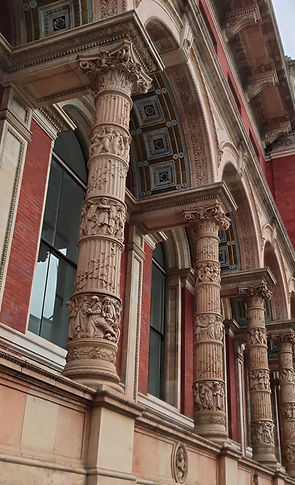
Ornately carved columns on the exterior walls

The main entrance
The building itself is a striking example of Victorian architecture. The intricate decorations are complex, but beautifully integrated into the overall design. The cafe is especially ornate.

The cafe
They have an extensive collection of Western European artifacts from the Middle Ages and the Renaissance. We saw altarpieces, reliquaries, vestments, chalices, stained glass, carved ivory, and more.
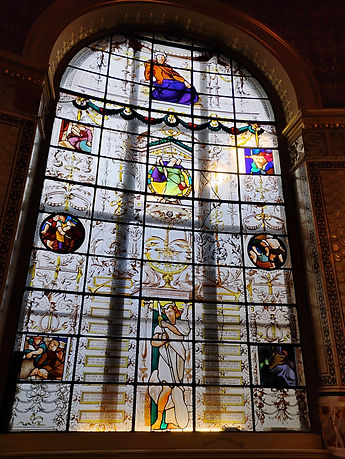
A stained glass window in the cafe

This tabernacle (c.1180) most likely held consecrated bread for the Catholic Mass. It is gilded bronze and copper, with champlevé enamel and walrus ivory.

St. Peter, c.1280. Stained glass.

Music page from a choirbook, c.1175

The Symmachi Panel, c.400. Ivory. The name of the influential Roman Symmachi family is inscribed on the panel. It depicts a priestess performing a pagan rite before an altar.
They had a lot of great stained glass. This fragment is from Trinity Chapel at Canterbury Cathedral.
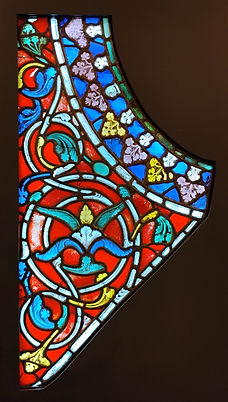
Stained glass, c.1180–1200

Italian harpsichord, 1574.

Harpsichord lid, detail
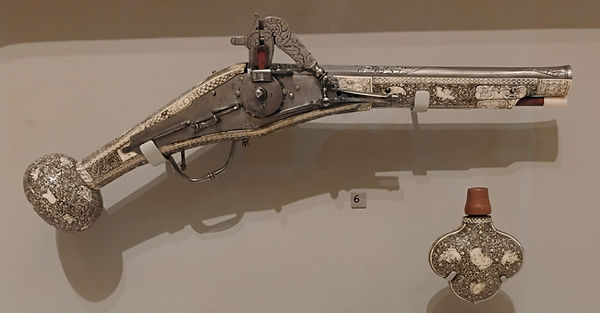
German pistol and powder flask, 1579.

Commercial stained glass from Morris, Marshall, Faulkner & Co., London, c.1864
They have a large collection if Islamic Arts. The Ardabil carpet is one of the largest and finest in existence. It dates from 1540.
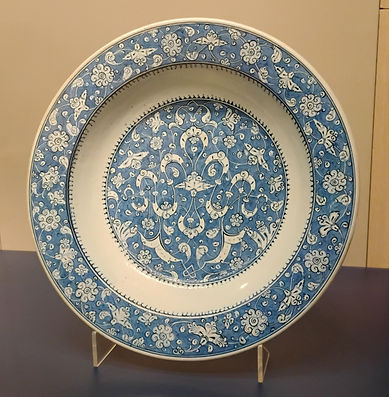
Iznik ceramic plate. c.1510
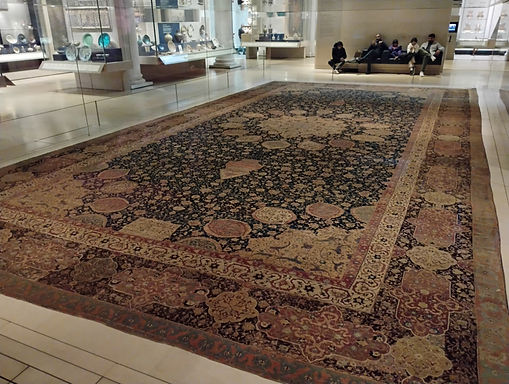
The Ardabil Carpet, 1540.
They have a large atrium that houses a cast gallery—plaster casts of great sculptures. I was impressed with this one of Michaelangelo's David. I was surprised to see that it is about twice life size.
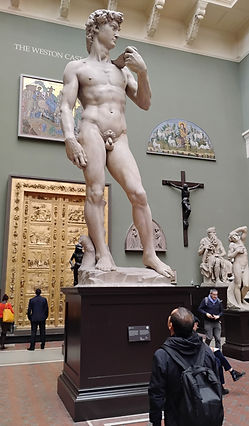
Cast of Michelangelo's David