


Tate Modern
London has two Tate museums: the Tate Britain and the Tate Modern. The Tate Britain specializes in British painting, while the Tate Modern focuses on 20th century international art. The Tate Modern is housed in a former power generating station. It appears ominous from the outside, but inside it shows an ingenious blend of modern architectural renovation within the contours of the old structure. Like many museums in London, it is free admission for many exhibits, with a charge to see others.
One advantage of housing the museum in a giant nine-story building is that there is lots of space for large galleries and installations. Many of the installations were "conceptual," which to me means you have to read the rap on the wall before you can understand what it is supposed to be.

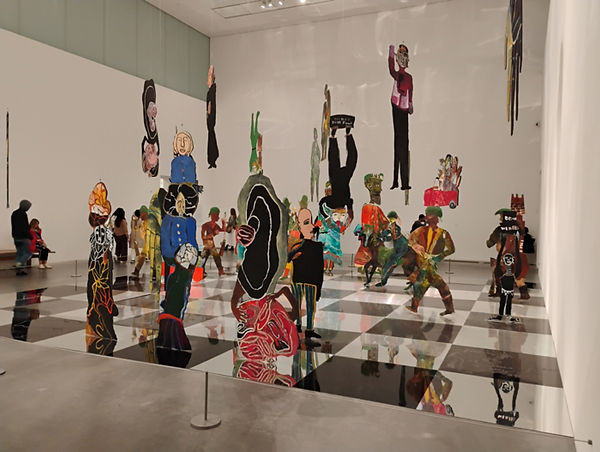
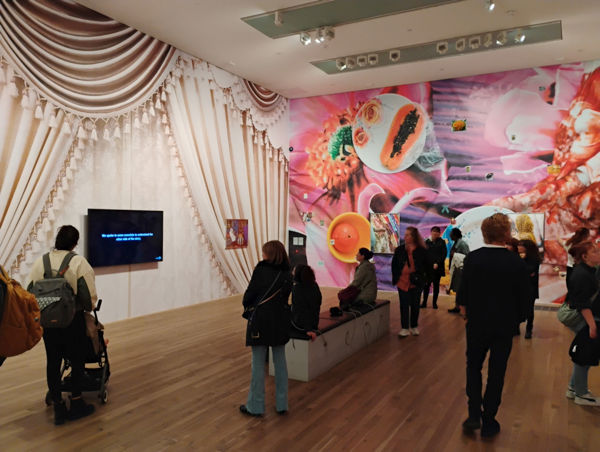
Along with new works, there are plenty of older modern works, including some classics from the early- and mid-twentieth century.
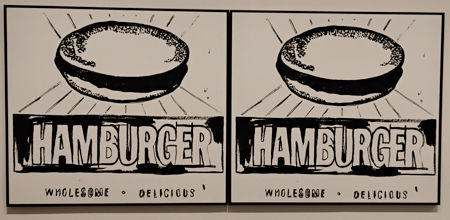
Andy Warhol. Hamburger, 1985–6. Acrylic paint and silkscreen on canvas.
One of the most interesting exhibits was about the German expressionist group called the Blue Rider, which included the Russian artist Wassily Kandinsky. In the early 1900s his art rapidly evolved from representational to a unique form of abstraction which was inspired by musical improvisation. He titled some of his paintings improvisations. While I found those works to be interesting, the one I liked the most was an elegant early painting called Riding Couple, which depicts a nighttime scene.
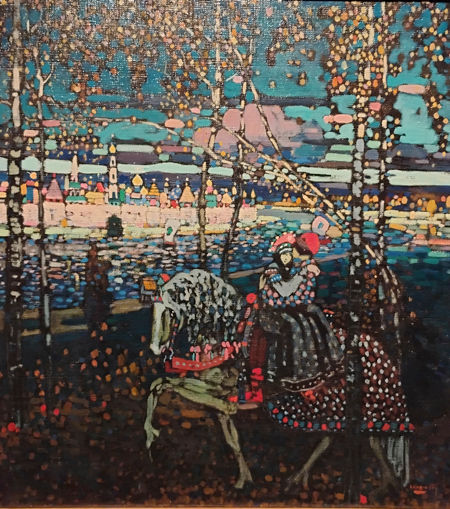
Wassily Kandinsky. Riding Couple, 1906–7. Oil on canvas.
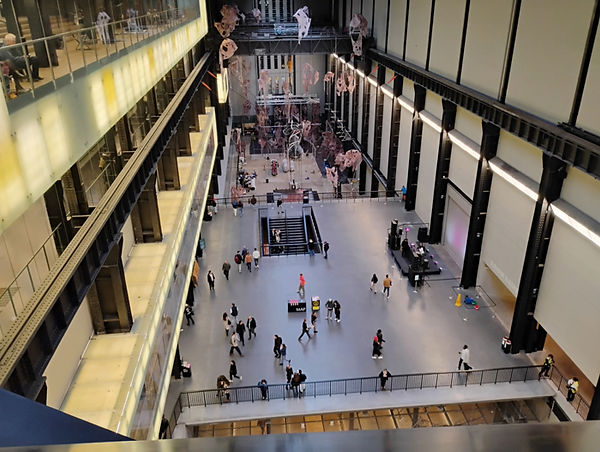
Originally a power plant, the building is unusual in its design and complexity. There are many spaces where you can look out over the lower floors. On the way out, we caught this view.
On the last Friday of every month they host an evening DJ party with loud music booming all over hell and lots of young people flooding in to make the scene. It's a great way to get young people into the museum and hopefully interested in modern art.